





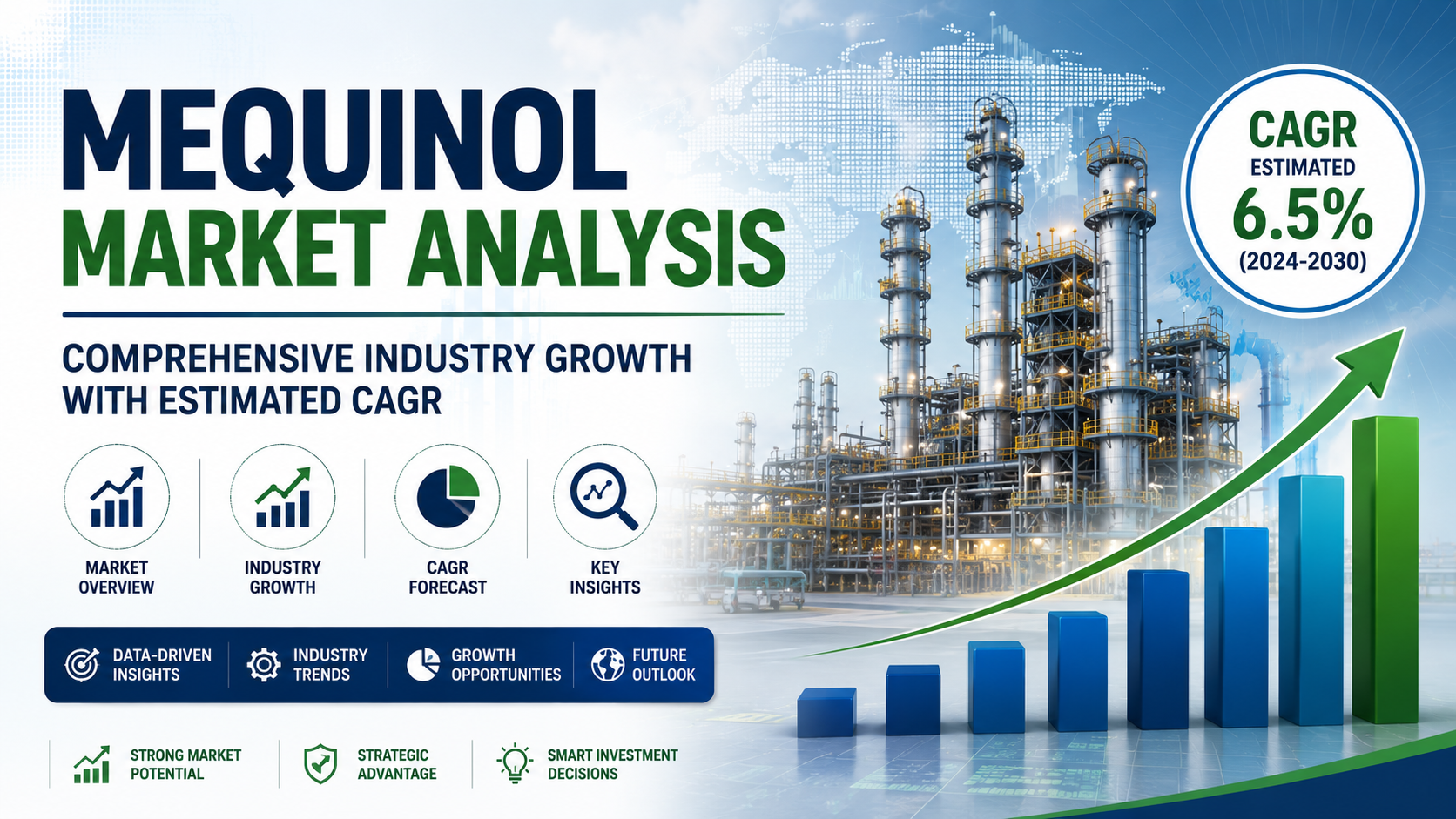
Mequinol Market Analysis: Comprehensive Industry Growth with Estimated CAGR
Posted on: May 21, 2026
The specialty chemical industry is undergoing steady transformation due to increasing demand for high-performance intermediates. This shift is strongly influencing pharmaceutical and dermatology-driven applications.
The market for mequinol is gradually expanding as industries move toward more regulated, precision-based chemical usage. Its adoption is increasing in controlled formulation environments.
Key market context:
- Rising dermatology and skincare demand
- Expansion of specialty chemical production
- Increasing focus on regulated active ingredients
The industry also explores compounds like mono methyl ether of hydroquinone in research-driven formulation studies. This enhances its relevance in scientific development pipelines.
Overall, the market is building a strong foundation based on safety, consistency, and innovation-led chemical usage.
Industry Trends and Demand Factors in Mequinol Market
The global specialty chemicals industry is shifting toward safer and more stable active ingredients. This shift is reshaping demand patterns across healthcare and cosmetic sectors.
This transformation is creating strong growth momentum for targeted chemical intermediates. Manufacturers are prioritising performance, safety, and regulatory compliance.
Key trends influencing growth:
- Rising dermatology treatment demand
- Increased focus on formulation safety
- Shift toward research-based chemical innovation
In technical discussions, hydroquinone methyl ether is frequently referenced for its role in intermediate chemistry. These evolving trends are expected to sustain long-term industry expansion across global markets.
What is Mequinol? Chemical Overview and Properties
Mequinol is a specialty compound used in regulated pharmaceutical and dermatology formulations. It is primarily valued for its role in controlled chemical systems where precision matters.
Chemical classification overview
- Chemical type – Phenolic derivative
It belongs to the family of phenolic compounds, known for their characteristic reactivity and relevance in organic synthesis.
- Stability – Moderate under controlled conditions
The compound maintains stability when processed under specific industrial parameters, ensuring predictable performance.
- Usage – Pharmaceutical and dermatology applications
It is used in targeted formulations for skincare solutions and pharma-based product development.
This compound is known in specialty chemistry for working well in controlled formulation systems. It is used where steady performance matters more than strong or wide chemical reactions.
In research work, mono methyl ether of hydroquinone is often studied to understand how its structure behaves. These studies help scientists improve how formulas are made in applied chemistry.
Industry Outlook: Mequinol Market Size and Growth Rate
The global specialty chemicals market is growing at a steady pace. Demand from healthcare, pharmaceuticals, and dermatology is supporting this growth. The segment linked to controlled intermediates is small but stable.
The mequinol market is a niche part of this space. It does not depend on large volume demand. Instead, it grows through specific use in regulated pharmaceutical and dermatology applications.
Market snapshot
| Factor | Insight |
| Market nature | Small, niche specialty segment |
| Demand pattern | Stable and application-based |
| Growth trend | Slow and steady rise |
| CAGR outlook | Moderate to high single-digit (expected trend) |
The expected CAGR shows steady growth over time. This is because the market is tightly regulated and used only in specific applications. It grows in a controlled way rather than fast expansion.
Growth is supported by the ongoing need for pharma and skincare-related formulations. This keeps demand consistent across key regions.
Growth highlights
- Higher use in pharmaceutical formulations
- Rising demand in dermatology treatments
- More research on chemical intermediates
- Shift toward regulated and high-purity products
Overall, the market shows stable long-term growth. It remains driven by scientific and industrial needs rather than mass consumption.
Key Growth Drivers in Mequinol Market
The expansion of dermatology treatments is one of the strongest drivers influencing demand for specialty intermediates. This is supported by growing global healthcare awareness. Pharmaceutical innovation is also contributing significantly to market growth. Companies are focusing on safer and more effective formulations.
Primary drivers:
- Dermatology treatment expansion
- Pharmaceutical R&D growth
- Chemical formulation innovation
In research discussions, hydroquinone methyl ether is often referenced for its chemical behaviour in formulation systems. These combined factors are creating a stable and long-term growth environment.
Where Mequinol is Used in Industrial Applications
The usage of specialty intermediates continues to expand across multiple industries. This diversification supports consistent market demand. Mequinol is primarily used in pharmaceutical and dermatological applications where controlled formulation is required.
Application breakdown:
Pharmaceutical sector
- Dermatology-based treatments
- Prescription formulations
Cosmetics industry
- Skin treatment products
- Controlled active formulations
Research applications
- Chemical synthesis studies
- Intermediate compound analysis
In laboratory environments, mono methyl ether of hydroquinone is used for comparative chemical research. This broad application base ensures stable relevance across industries.
Market Segmentation Analysis
Market segmentation helps in understanding how demand is distributed across industries and applications. It provides clarity on areas of growth concentration.
The mequinol market shows balanced segmentation across the pharmaceutical, cosmetic, and research sectors.
Segmentation structure:
By application:
- Pharmaceuticals
- Cosmetics
- Research chemicals
By end-user:
- Manufacturing companies
- Research laboratories
- Pharma organizations
The strongest demand remains concentrated in pharmaceutical applications due to regulated usage patterns. This structure supports stable and diversified market growth.
How Different Regions Contribute to Mequinol Market Growth
Regional performance plays a key role in shaping global market dynamics. Different regions exhibit varying levels of adoption based on industrial maturity.
Asia-Pacific leads the market due to strong manufacturing capabilities and cost advantages. North America and Europe follow with research and regulatory-driven demand.
Regional breakdown:
| Region | Market behavior |
| Asia-Pacific | Manufacturing dominance |
| North America | R&D-focused growth |
| Europe | Strict regulatory environment |
| Others | Emerging adoption |
Mequinol demand varies across regions depending on regulatory approvals and industrial infrastructure. Overall, regional diversity supports balanced global expansion.
Competitive Landscape Overview
The competitive landscape is shaped by specialty chemical manufacturers and pharmaceutical ingredient suppliers. Innovation plays a key role in market positioning.
Companies focus on purity, compliance, and R&D strength to maintain competitiveness. Technical expertise remains a major differentiator.
Market structure:
- Specialty chemical producers
- Pharmaceutical ingredient suppliers
- Research-based manufacturers
In research applications, hydroquinone methyl ether is used as a reference compound in comparative studies. The market remains moderately fragmented with strong technical competition.
Operational Challenges in Specialty Chemicals
The mequinol market faces regulatory and operational challenges that can affect its growth rate. These challenges mainly come from strict compliance needs and controlled usage requirements.
Key challenges and market impact
- Regulations – Slower approvals
Strict regulatory frameworks in the pharma and cosmetic sectors delay product approvals and limit faster market entry.
- Safety concerns – Restricted usage
Controlled handling requirements limit flexibility across industries, especially in consumer-facing applications.
- Cost pressure – Higher production cost
Specialised processing and compliance requirements increase overall manufacturing and production expenses.
These challenges collectively create a more controlled market environment. However, they also ensure safer and more standardised use of the compound in regulated industries.
Shifting Opportunities in the Market Ecosystem
The market offers strong opportunities driven by healthcare expansion and innovation in chemical formulations. Emerging economies are playing a key role in demand growth.
Increasing investment in dermatology treatments is opening new commercial avenues. Research in safer intermediates is also expanding globally.
Growth opportunities:
- Dermatology innovation expansion
- Emerging market adoption
- Advanced formulation development
The compound mono methyl ether of hydroquinone continues to support research-based innovation in chemical industries. Future growth is expected to remain stable, supported by strong innovation-driven demand.
Overall Market Perspective on Mequinol
The specialty chemical industry continues to evolve with increasing focus on precision-based and regulated intermediates. This trend supports long-term structural growth. Mequinol remains highly relevant due to its applications in the pharmaceutical and dermatology sectors. Its demand is expected to remain steady across regulated markets.
Within this evolving ecosystem, Vinati Organics plays a significant role in supporting specialty chemical requirements across industrial applications. They focus on delivering consistent, high-quality, and reliable chemical solutions for global markets.
The market outlook remains positive, supported by innovation, research, and healthcare expansion. Their contribution further strengthens the supply ecosystem for advanced intermediates. Contact them today to explore specialty chemical solutions for your industrial requirements.
Related Posts








 K&A
K&A