





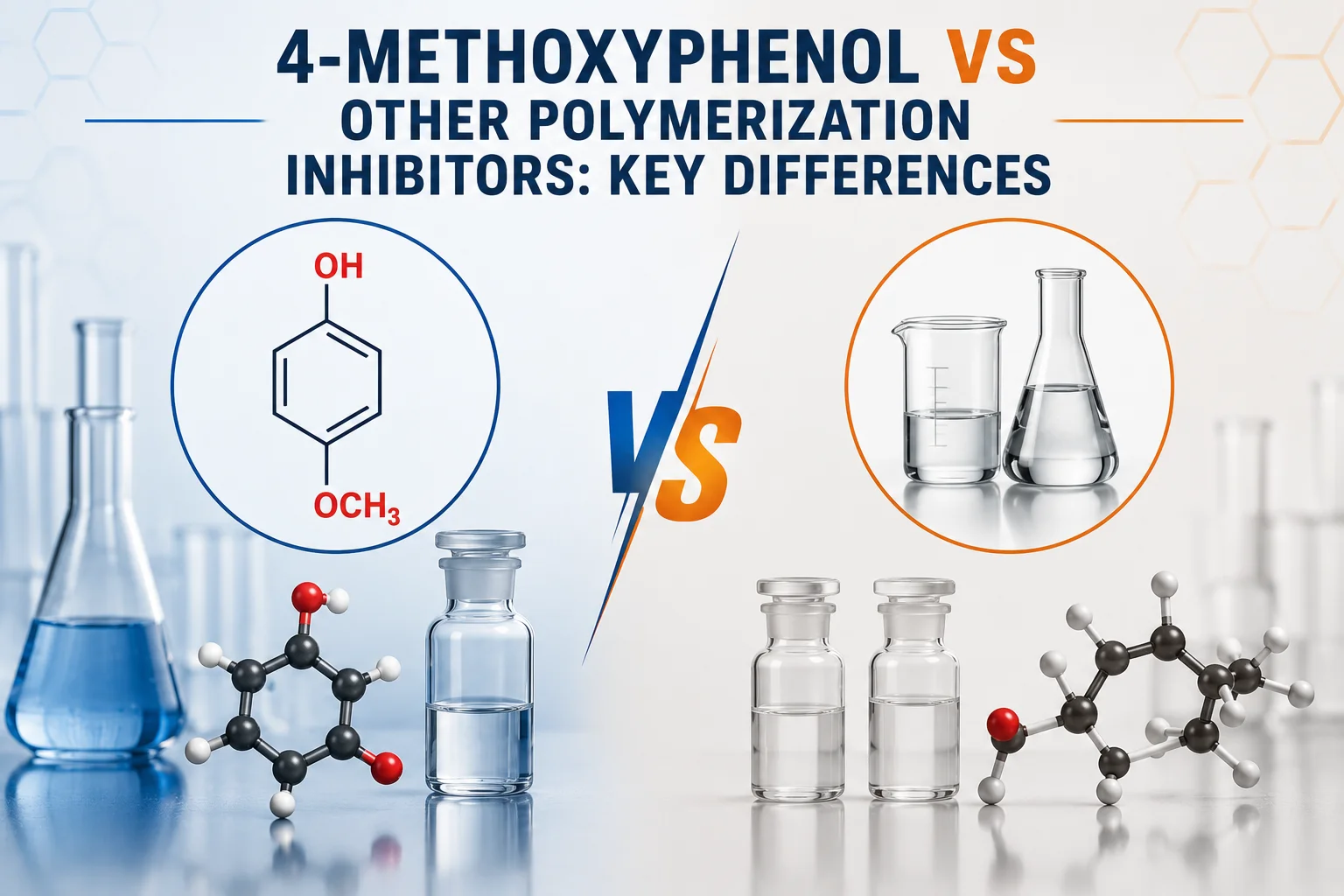
4-Methoxyphenol Vs Other Polymerization Inhibitors: Key Differences
Posted on: July 23, 2026
Polymerization plays a crucial role in the chemical industry, enabling the production of plastics, resins, coatings, adhesives, and more. Nevertheless, undesired polymerization during storage, transportation, or processing can cause product loss, safety issues, and damage to equipment. To prevent this, manufacturers typically employ chemical inhibitors to regulate such reactions.
Among the different inhibitors available today, 4 methoxyphenol is one of the most used options. It is known for its ability to slow down unwanted polymerization while helping maintain product quality. At the same time, several other inhibitors are also available, and each one works differently depending on the application.
Why Is a Polymerization Inhibitor Important?
Many monomers can start polymerizing when exposed to heat, light, oxygen, or contaminants. While this reaction is useful during manufacturing, uncontrolled polymerization can create serious operational problems.
A suitable chemical inhibitor helps by:
- Preventing unwanted polymer formation
- Increasing the storage life of sensitive chemicals
- Improving product stability
- Reducing safety risks during transportation
- Minimising equipment blockage caused by polymer deposits
Choosing the right inhibitor depends on the type of monomer, storage conditions, temperature, and the production process.
What Is 4 Methoxyphenol?
4 methoxyphenol, also known as MEHQ, is a widely used polymerization inhibitor chemical. It is mainly used to prevent premature polymerization in acrylic monomers, methacrylates, styrene, vinyl compounds, and several other reactive chemicals.
It works by reacting with free radicals that trigger polymer formation. By controlling these radicals, it helps maintain the stability of the stored material until it is ready for use.
Some common industries include:
- Chemical manufacturing
- Resin production
- Adhesive manufacturing
- Paint and coating industries
- Plastic processing
- Specialty chemical production
Its effectiveness and reliable performance make it a preferred chemical inhibitor for many industrial applications.
How Does 4 Methoxyphenol Work?
The main function of 4 methoxyphenol is to interrupt the chain reaction responsible for polymerization.
The process involves:
- Free radicals begin forming within the monomer.
- 4 methoxyphenol reacts with these radicals.
- The reaction slows or stops further polymer growth.
- The chemical remains stable until controlled polymerization is required.
This controlled action helps manufacturers reduce waste and improve process safety.
How Does 4 Methoxyphenol Compare with Other Polymerization Inhibitors?
Different inhibitors are designed for different operating conditions. The following table highlights some key differences.
| Parameter | 4 methoxyphenol | Hydroquinone | TBC | Phenothiazine |
| Common Applications | Acrylics, methacrylates, styrene | Acrylic systems | Styrene storage | High-temperature monomers |
| Performance At Normal Storage Conditions | Excellent | Good | Good | Very Good |
| Oxygen Requirement | Performs best with oxygen present | Requires oxygen | Oxygen dependent | Less oxygen dependent |
| Temperature Suitability | Moderate | Moderate | Higher temperatures | High temperatures |
| Industrial Usage | Very common | Common | Common | Selected applications |
Every chemical inhibitor has its own strengths. The right selection depends on operating conditions rather than choosing a single product for every process.
What Makes 4 Methoxyphenol A Preferred Choice?
Many manufacturers continue using 4 methoxyphenol because it offers several practical benefits.
- Reliable Inhibition Performance
It effectively controls unwanted polymerization under recommended storage conditions. This helps improve process consistency.
- Suitable For Multiple Monomers
One of the biggest advantages is its compatibility with several commercially important monomers. This reduces the need to manage different inhibitor systems.
- Better Product Stability
A stable polymerization inhibitor chemical helps preserve the quality of valuable raw materials throughout storage and transportation.
- Supports Safer Operations
Reducing the risk of unexpected polymer formation also helps lower operational hazards in manufacturing facilities.
- Easy Integration into Existing Processes
Since 4 methoxyphenol has been widely used across industries for many years, manufacturers are already familiar with its handling and performance.
When Might Other Polymerization Inhibitors Be Better?
Although 4 methoxyphenol performs well in many situations, some applications may require a different inhibitor.
Other inhibitors may be preferred when:
- Very high processing temperatures are involved.
- Oxygen availability is limited.
- The chemistry of the monomer requires a specialised inhibitor.
- Long-term storage under unique conditions is planned.
- Process-specific regulatory or technical requirements exist.
Selecting the correct chemical inhibitor should always be based on technical evaluation rather than cost alone.
What Factors Should You Consider Before Selecting a Polymerization Inhibitor?
Choosing the right polymerization inhibitor chemical involves evaluating several important factors.
- Type Of Monomer: Different monomers react differently. The inhibitor should match the chemistry of the product being stored or processed.
- Storage Conditions: Temperature, exposure to air, and storage duration can all influence inhibitor performance.
- Manufacturing Process: Some production systems require inhibitors that can be removed easily before polymerization begins.
- Safety Requirements: The inhibitor should support safe handling and reduce the possibility of uncontrolled reactions.
- Product Compatibility: The selected chemical inhibitor should not negatively affect the final product quality or downstream processing.
Where Is 4 Methoxyphenol Commonly Used?
Because of its consistent performance, 4 methoxyphenol finds applications across several industrial sectors.
Some common uses include:
- Acrylic acid production
- Acrylic ester manufacturing
- Methacrylate processing
- Styrene storage
- Resin manufacturing
- Coating production
- Adhesive manufacturing
- Chemical distribution and storage
These industries rely on stable inhibitor performance to reduce operational risks and maintain product quality.
Understanding The Difference Helps You Make Better Decisions
No single inhibitor is suitable for every industrial application. The choice depends on the monomer, operating conditions, storage environment, and production requirements. While different products offer specific advantages, 4 methoxyphenol continues to be one of the most trusted solutions for controlling unwanted polymerization in a wide range of chemical processes.
Vinati Organics offers high-quality specialty chemicals that meet the evolving needs of industrial manufacturers. Its expertise in manufacturing reliable chemical products helps businesses maintain consistent quality and dependable process performance. To learn more about its product range and discuss your application requirements, get in touch with Vinati Organics today.
Related Posts




 K&A
K&A