





What is 4-Methoxyphenol (MEHQ)? Uses, Safety & Industrial Applications
Posted on: May 11, 2026
From improving chemical stability to preventing unwanted reactions, 4 methoxyphenol plays a key role across multiple industries. Explore its uses, safety, and industrial importance in this blog.
Have you ever wondered how industries safely store and transport highly reactive chemicals without affecting product quality? In industrial manufacturing, even a minor uncontrolled reaction can lead to material wastage, production delays, and safety concerns.
To address this challenge, manufacturers use stabilising compounds to maintain chemical consistency during processing and storage. One such widely used compound is methoxyphenol, known for its ability to control premature polymerisation in reactive materials.
Today, industries such as polymers, coatings, pharmaceuticals, adhesives, and specialty chemicals depend on para methoxy phenol for stable production systems and safer handling practices. Its industrial importance continues to grow because manufacturers increasingly focus on operational safety, product stability, and process efficiency.
What is 4 Methoxyphenol?
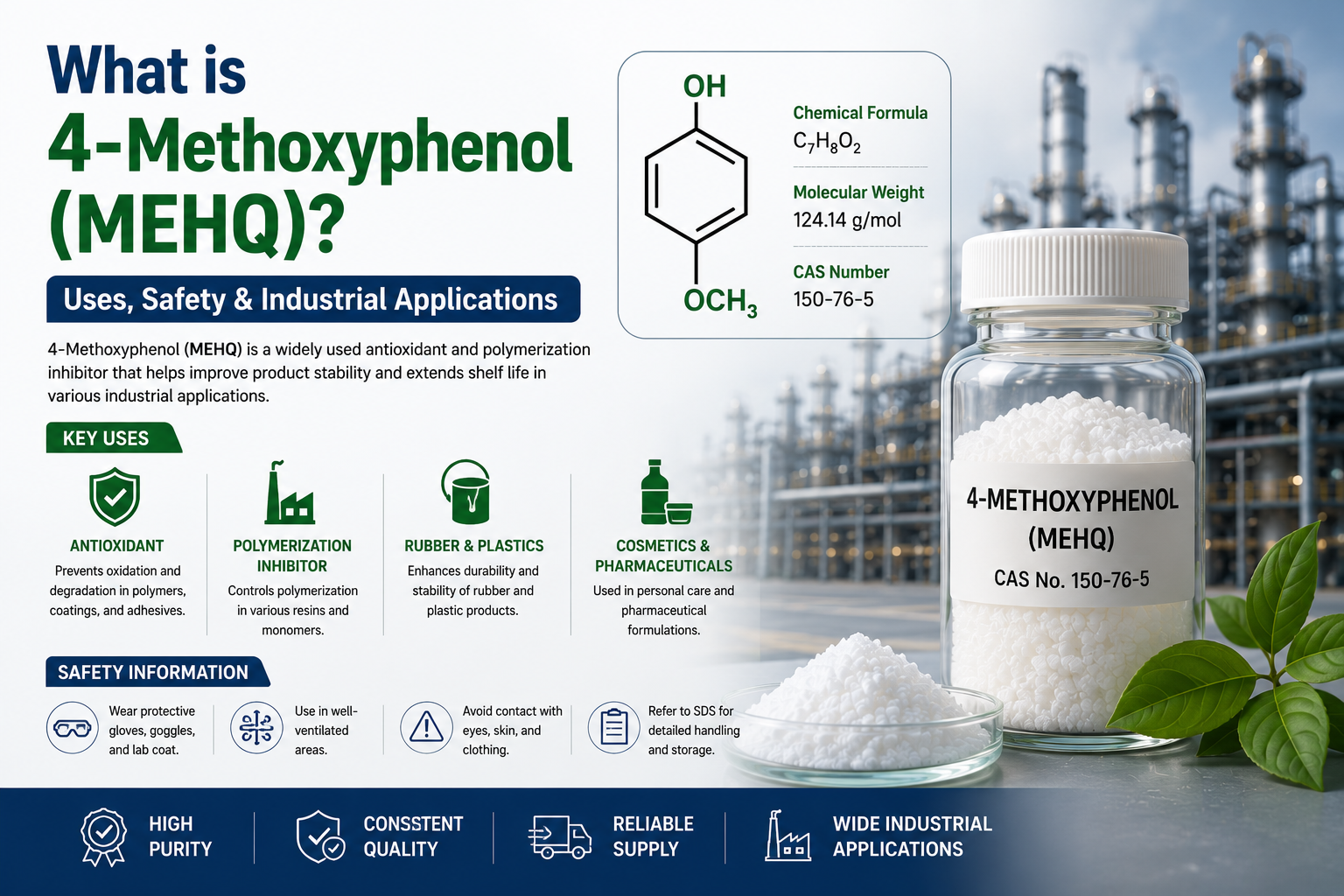
4 methoxyphenol is an organic compound commonly used as a polymerisation inhibitor and stabilising agent in industrial manufacturing. It helps prevent unwanted chemical reactions in reactive monomers and chemical formulations during storage, processing, and transportation.
- Chemical Identity: It is also known as MEHQ and Hydroquinone Monomethyl Ether in industrial applications.
- Industrial Function: It primarily acts as a stabiliser, controlling premature polymer formation.
- Physical Appearance: It usually appears as a white to off-white crystalline solid.
- Commercial Importance: It is widely used across polymers, coatings, pharmaceuticals, and specialty chemical industries.
- Storage Relevance: It helps industries maintain chemical quality during long-term storage conditions.
Because of its stabilising properties, industries use 4 methoxyphenol to improve manufacturing reliability and reduce operational risks. Its role has become increasingly important in sectors handling temperature-sensitive and reactive chemical systems.
How Methoxyphenol Works
Methoxyphenol works by slowing free-radical reactions responsible for premature polymerisation. This allows manufacturers to maintain better control over reactive chemical systems during storage and industrial processing.
- Polymerisation Inhibitor Role: Prevents unwanted polymer formation in acrylic monomers and similar reactive materials.
- Oxidation Stability: Supports resistance against oxidation-related degradation during manufacturing and storage.
- Shelf-Life Improvement: Maintains formulation stability for longer storage durations.
- Reaction Control: Helps maintain controlled production environments during sensitive chemical operations.
- Temperature Stability Support: Reduces the risk of instability caused by heat fluctuations during transportation.
The stabilising action of methoxyphenol helps industries improve product consistency and minimise production losses. This makes it highly valuable in modern manufacturing environments handling reactive formulations.
Key Properties of Para Methoxy Phenol
Para methoxy phenol is widely preferred in industrial manufacturing because of its efficient stabilising performance and compatibility with reactive chemical systems. Its chemical behaviour supports safer handling and improved process reliability across multiple applications.
- Chemical Stability
Offers consistent stability under recommended industrial storage and handling conditions, ensuring reliable performance in controlled environments.
- Solubility
Shows good compatibility with several organic solvents commonly used in industrial formulations.
- Polymerisation Control
Works effectively even at low concentrations to control unwanted monomer reactions during processing.
- Storage Compatibility
Supports safer long-term storage of reactive industrial materials without compromising quality.
- Industrial Handling Efficiency
Integrates smoothly into existing production systems without requiring major operational changes.
These properties make para methoxy phenol suitable for industries requiring controlled chemical processing and stable formulations. Its growing use reflects the rising demand for safer, more efficient industrial manufacturing practices.
Major Uses of 4 Methoxyphenol
The demand for 4 methoxyphenol continues to rise as industries need reliable stabilisation for reactive chemicals. Its versatility makes it useful across multiple sectors where storage safety and reaction control are critical.
1.Polymer & Resin Industry
Used to stabilise reactive monomers and improve storage reliability in resin-based systems. It helps control premature reactions in acrylics, styrene, adhesives, and coatings, ensuring consistent product quality and reduced material loss.
2.Pharmaceutical Industry
Supports controlled chemical synthesis and intermediate production. It helps maintain reaction stability, which is essential for achieving consistent batch quality in pharmaceutical manufacturing.
3.Cosmetics & Personal Care
Applied in select formulations to maintain product stability during storage and processing. It supports consistent formulation performance and longer shelf life.
4.Printing Ink & Paint Industry
Prevents premature curing in inks, paints, and coating systems. This improves product usability and reduces wastage during storage and application.
5.Chemical Manufacturing
Used to enhance stability in reactive chemical storage and transportation. It helps maintain product integrity during long-distance shipping and fluctuating environmental conditions.
Across industries, 4 methoxyphenol plays a key role in improving stability, reducing losses, and supporting safer chemical handling throughout the production cycle.
Why Industries Use Para Methoxy Phenol
Industries use para methoxyphenol because it enables safer chemical handling, improved product stability, and better manufacturing efficiency. Its stabilising performance helps manufacturers reduce operational risks while maintaining process consistency.
- Improves Shelf Life
- Supports Safer Transportation
- Minimises Product Losses
- Enhances Process Stability
- Improves Inventory Management
- Reduces Operational Risks
As industrial manufacturing continues to expand globally, stabilising compounds are becoming increasingly important in maintaining safe and efficient operations. Their ability to support consistent production makes them valuable across multiple sectors.
Safety & Handling Guidelines for 4 Methoxyphenol
Proper handling of 4 methoxyphenol is important for maintaining workplace safety, product quality, and operational efficiency. Industries using stabilising compounds should always follow recommended storage and safety practices.
Storage Recommendations
- Store in cool and dry environments
- Avoid direct sunlight exposure
- Use tightly sealed containers
- Prevent excessive heat and moisture exposure
- Follow recommended industrial storage temperatures
Temperature sensitivity can affect chemical stability during long-term storage. Proper environmental control helps maintain product performance and quality.
Worker Safety Measures
- Use PPE such as gloves and protective eyewear
- Maintain industrial ventilation systems
- Avoid direct inhalation exposure
- Follow workplace hygiene practices
- Train employees on chemical handling procedures
Industrial facilities should maintain proper ventilation in production and packaging areas to minimise exposure risks during routine operations.
Transportation & Packaging
- Use approved industrial-grade packaging
- Follow hazard communication standards
- Ensure proper product labelling
- Maintain secure transportation practices
- Monitor environmental conditions during shipment
Proper packaging and transportation practices help reduce contamination and leakage risks during industrial logistics operations.
Regulatory & Safety Considerations
Industries should always review SDS documentation before handling chemical stabilisers. Safety Data Sheets provide important information related to storage, emergency response, disposal practices, and workplace safety requirements.
Manufacturers should also follow industrial chemical safety guidelines provided by organisations such as OSHA to maintain regulatory compliance.
Global Demand & Market Relevance
The global specialty chemicals market continues to expand because of increasing industrialisation, infrastructure growth, and rising demand for advanced manufacturing materials. This growth is also increasing the industrial demand for methoxyphenol across multiple sectors.
According to the American Chemistry Council (ACC), global chemical production is experiencing a steady, albeit moderating, growth, with a projected expansion of 1.9% in 2026, following a 2.6% increase in 2025.
Some major industries contributing to rising demand include:
- Polymer manufacturing
- Industrial coatings
- Adhesive production
- Pharmaceutical intermediates
- Construction chemicals
- Specialty resin manufacturing
The increasing use of reactive monomers in industrial production is also driving higher demand for reliable stabilisation systems. As industries continue focusing on safer storage, controlled processing, and improved transportation reliability, the market relevance of stabilising compounds is expected to grow further.
Supplier Selection Criteria for Para methoxy phenol
Selecting the right supplier is important for maintaining product consistency, industrial reliability, and safe manufacturing operations. Industrial buyers should evaluate suppliers carefully based on quality standards, technical support, and supply capabilities.
- Consistent product quality standards
- Industrial certifications and compliance
- Reliable packaging systems
- Strong supply chain management
- Technical support availability
- Export and logistics experience
- Proper documentation systems
- Safe transportation practices
A reliable supplier helps industries maintain smoother production systems and better inventory management. Long-term supply consistency also supports improved operational planning and reduced manufacturing disruptions.
Improving Industrial Stability with Chemical Solutions
The growing demand for stable industrial formulations has increased the importance of chemical stabilisers across modern manufacturing industries. From polymers and coatings to pharmaceuticals and specialty chemicals, stabilising compounds help industries maintain safer handling practices, improved storage conditions, and better manufacturing consistency.
Vinati Organics supports industrial manufacturing requirements through specialty chemical solutions designed for modern processing environments. They focus on quality consistency, operational reliability, and industrial performance to support businesses handling reactive chemical systems across multiple sectors.
Businesses looking to improve product stability, reduce operational risks, and maintain safer manufacturing systems can explore industrial-grade stabilising solutions based on their specific application and production requirements.
Related Posts





 K&A
K&A