



Organic Manufacturing Practices in the Chemical Industry
Posted on: June 15, 2026
The future of chemical production depends on balancing industrial growth with environmental responsibility, making sustainability a key focus for manufacturers worldwide.
Industries across the world are facing increasing pressure to reduce environmental impact while maintaining productivity and product quality. This shift is encouraging manufacturers to rethink how resources are used throughout the production cycle.
As a result, organic manufacturing has become an important focus area for organisations seeking long-term operational success. It supports responsible production practices while helping businesses improve efficiency and resource management.
The chemical sector is playing a significant role in this transition through innovation, process optimisation, and environmentally conscious production strategies. These efforts are shaping the future of industrial manufacturing and sustainability.
Why Organic Is Reshaping Chemical Manufacturing
Environmental responsibility is no longer viewed as a separate business objective. It has become an important factor influencing production decisions, investment strategies, and operational planning.
Key Drivers Behind This Shift
- Growing awareness of environmental challenges
- Increasing focus on resource conservation
- Rising demand for responsible production methods
- Greater emphasis on operational efficiency
- Expansion of sustainability-focused business initiatives
- Continuous improvements in manufacturing technologies
These factors are encouraging companies to adopt more responsible production practices. As expectations continue to evolve, sustainability is becoming an integral part of industrial growth strategies.
Core Elements of Organic Chemical Production
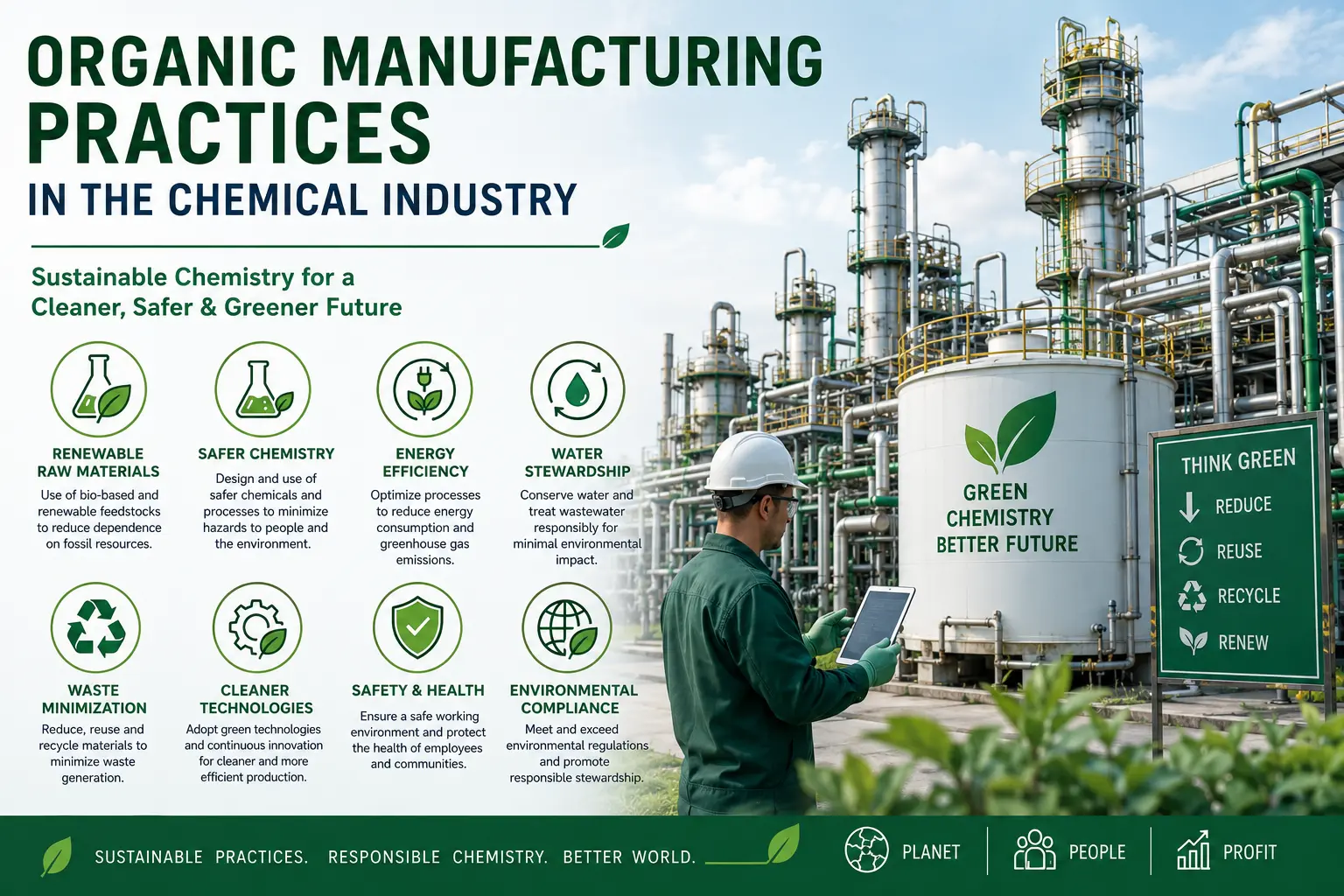
Building a responsible manufacturing system requires a combination of environmental, operational, and economic considerations. Successful sustainable chemical manufacturing focuses on reducing waste while maximising resource efficiency.
| Core Element | Contribution to Sustainability |
| Resource Optimisation | Reduces material consumption |
| Energy Efficiency | Supports lower energy usage |
| Waste Management | Minimises environmental impact |
| Process Improvement | Enhances production performance |
| Responsible Sourcing | Promotes long-term sustainability |
| Emission Control | Supports cleaner operations |
Each of these elements contributes to a more balanced manufacturing approach. Together, they help organisations achieve both environmental and operational objectives.
How Does Green Chemistry Support Sustainability Goals?
The principles of green chemistry focus on designing products and processes that minimise environmental impact while maintaining performance. This approach encourages manufacturers to consider sustainability throughout the entire production lifecycle.
· Waste Prevention
Reducing waste at the source helps minimise resource consumption and lower the environmental burden associated with disposal and treatment.
· Safer Material Selection
Choosing materials that support safer handling and processing contributes to improved workplace practices and responsible production.
· Efficient Energy Use
Production processes designed to consume less energy can help improve operational efficiency while reducing environmental impact.
· Process Innovation
Continuous improvements in manufacturing methods allow organisations to achieve higher productivity with fewer resources.
The adoption of green chemistry principles continues to influence modern manufacturing strategies. These practices help businesses move towards cleaner and more efficient production systems.
Practical Approaches to Chemical Industry Sustainability
Many organisations are implementing targeted initiatives to strengthen chemical industry sustainability across their operations. These practices support long-term environmental and business objectives.
1. Improving Energy Efficiency
Upgrading equipment and optimising production processes can help reduce overall energy consumption.
2. Conserving Water Resources
Water management programmes support responsible resource use and reduce unnecessary consumption.
3. Minimising Production Waste
Waste reduction initiatives help improve material utilisation and lower disposal requirements.
4. Reducing Emissions
Emission control measures contribute to cleaner production environments and improved environmental performance.
5. Enhancing Process Efficiency
Continuous monitoring and optimisation help manufacturers improve productivity while reducing resource usage.
These practices demonstrate how chemical industry sustainability can be integrated into everyday operations. Their implementation supports both environmental stewardship and operational excellence.
Benefits of Eco-Friendly Manufacturing Strategies
Organisations are increasingly recognising the value of adopting eco-friendly manufacturing approaches. These strategies provide advantages that extend beyond environmental performance.
Key Benefits
- Improved resource utilisation
- Lower environmental impact
- Greater operational efficiency
- Enhanced regulatory readiness
- Stronger corporate reputation
- Better long-term sustainability outcomes
The adoption of eco-friendly manufacturing practices can create value across multiple areas of an organisation. This makes sustainability an important component of long-term business planning.
Technology as a Driver of Sustainable Progress
Advancements in technology are helping a construction chemicals manufacturer achieve sustainability goals more effectively than ever before. Digital tools and modern production systems support smarter decision-making, improved operational performance, and greater efficiency throughout the manufacturing process.
Technologies Supporting Sustainable Operations
| Technology Area | Sustainability Contribution |
| Process Automation | Improves efficiency and consistency |
| Real-Time Monitoring | Enables resource optimisation |
| Data Analytics | Supports informed decision-making |
| Smart Manufacturing Systems | Reduces operational waste |
| Advanced Process Controls | Enhances production performance |
Technology continues to play a critical role in advancing sustainable manufacturing initiatives. These innovations help organisations identify opportunities for continuous improvement.
Challenges on the Path to Sustainable Manufacturing
While sustainability offers significant benefits, implementation often requires careful planning and long-term commitment. Manufacturers must balance operational goals with environmental objectives.
Common Considerations
- Investment in new technologies
- Process adaptation requirements
- Workforce training and development
- Resource management improvements
- Supply chain alignment
- Continuous performance monitoring
Addressing these challenges requires a structured and strategic approach. Organisations that invest in long-term sustainability initiatives are often better positioned to adapt to future industry expectations.
What Does the Future of Organic Chemical Manufacturing Look Like
The future of the chemical industry will be shaped by innovation, efficiency, and environmental responsibility. Manufacturers are expected to continue exploring new ways to improve production while reducing environmental impact.
- Increased adoption of advanced manufacturing technologies
- Greater focus on circular economy principles
- Expansion of cleaner production methods
- Continued investment in research and development
- Stronger sustainability commitments across industries
These developments are expected to influence manufacturing practices for years to come. As sustainability becomes increasingly important, organisations will continue seeking innovative ways to achieve responsible growth.
Advancing Industry Through Responsible Manufacturing
The future of manufacturing will be shaped by how effectively industries balance performance, innovation, and environmental responsibility. As expectations continue to evolve, sustainable manufacturing is becoming a key factor in achieving long-term growth and operational resilience.
Vinati Organics supports this transition through advanced manufacturing capabilities, continuous innovation, and a commitment to organic chemical manufacturing. Their focus on quality, efficiency, and responsible production helps address the changing requirements of modern industries.
As sustainability continues to influence industrial development, manufacturers that embrace environmentally conscious practices will be better positioned for future success. To learn more about their specialty chemical expertise and manufacturing capabilities, get in touch with the team today.
Related Posts





 K&A
K&A