





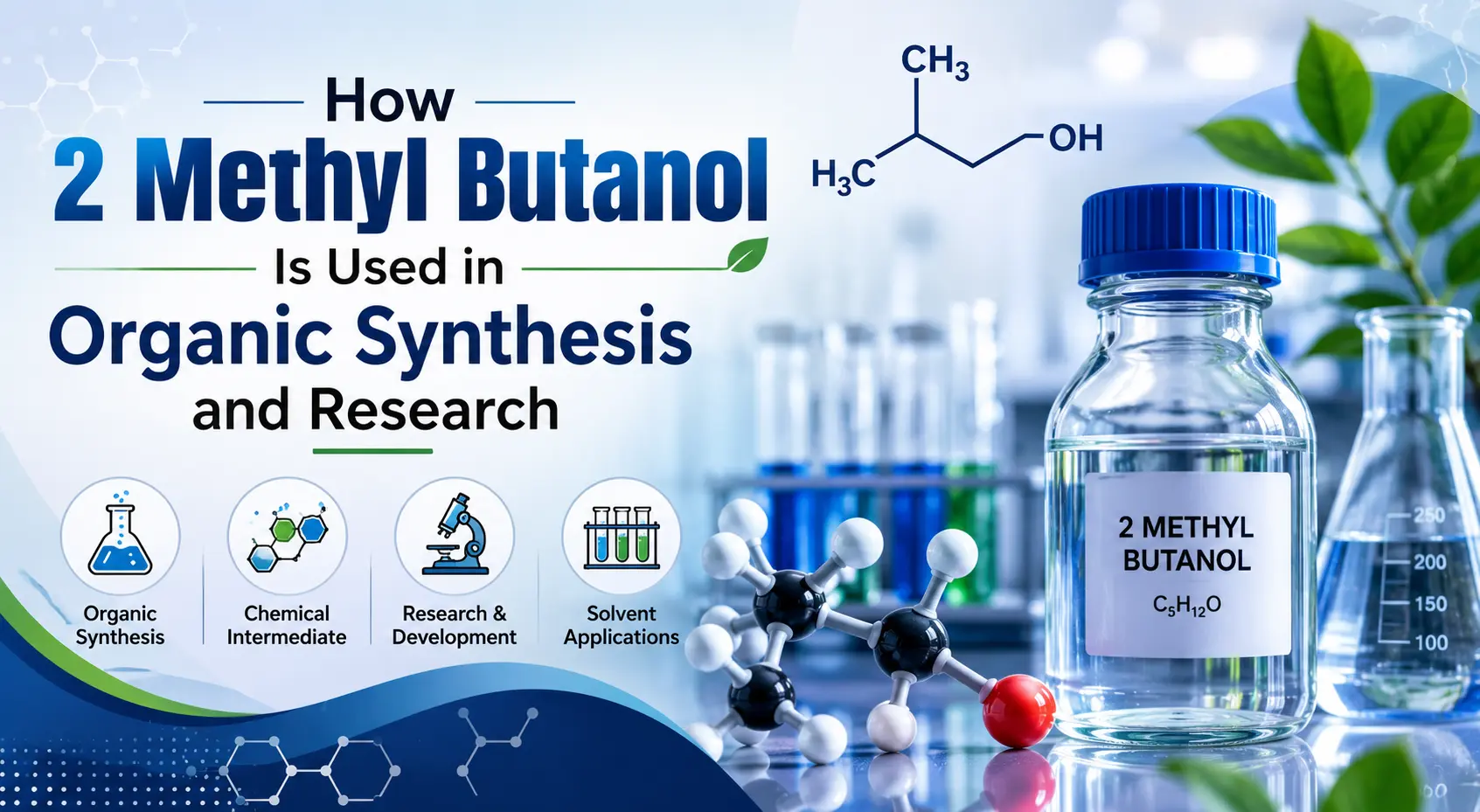
How 2 Methyl 2 Butanol Is Used in Organic Synthesis and Research
Posted on: June 22, 2026
The role of specialized alcohols in organic synthesis offers deeper insight into modern laboratory and industrial chemistry.
Organic synthesis plays a key role in the development of modern chemical products and advanced research applications. It relies on a wide range of compounds that help improve reaction efficiency and support innovation in laboratory and industrial processes.
Among these compounds, 2 methyl butanol is widely recognised for its usefulness in research and synthesis environments. Its functional characteristics make it suitable for a variety of controlled chemical applications.
As the demand for high-performance intermediates continues to grow, such compounds are becoming increasingly important in supporting both scientific studies and industrial development.
What Is 2-Methyl-2-Butanol?
Understanding a compound begins with examining its chemical identity and fundamental characteristics. This helps researchers determine its suitability for different applications.
Chemical Identity
- IUPAC Name: 2-Methylbutan-2-ol
- Molecular Formula: C₅H₁₂O
- Chemical Family: Tertiary Alcohol
- Common Name: tert-Amyl alcohol
- Molecular Weight: 88.15 g/mol
Basic Characteristics
- Colourless liquid appearance
- Characteristic odour
- Slight solubility in water
- Compatibility with various organic solvents
- Useful solvent and reaction medium properties
These characteristics contribute to the compound’s usefulness across multiple research and industrial settings. Its chemical behaviour makes it suitable for a variety of specialised applications.
Understanding the 2 Methyl 2 Butanol Structure
The molecular arrangement of a compound often determines how it behaves during chemical reactions. Understanding the 2 methyl 2 butanol structure helps explain its importance in organic synthesis.
Structural Features
Feature | Description |
| Hydroxyl Group (-OH) | Attached to a tertiary carbon |
| Carbon Skeleton | Branched-chain structure |
| Functional Classification | Tertiary alcohol |
| Molecular Formula | C₅H₁₂O |
Why the Structure Matters
- Influences reaction pathways
- Supports specific synthesis requirements
- Affects solvent behaviour
- Contributes to chemical stability
- Impacts interaction with other compounds
The 2 methyl 2 butanol structure provides a combination of functionality and stability that researchers often seek during synthesis work. These characteristics contribute to its value as a research and industrial chemical intermediate.
Key 2 Methyl Butanol Property Characteristics
Physical and chemical properties influence how compounds are stored, handled, and utilised in laboratory environments. Understanding important 2 methyl butanol property attributes helps researchers evaluate its potential applications.
Important Properties
Property | General Characteristic |
Physical State | Liquid |
Appearance | Clear and colourless |
Chemical Type | Tertiary alcohol |
Solubility | Partially soluble in water |
Solvent Compatibility | Soluble in many organic solvents |
Practical Relevance
- Supports laboratory-scale synthesis
- Functions as a useful reaction medium
- Assists in specialised research applications
- Offers flexibility across different experimental environments
These 2 methyl butanol property characteristics contribute to its versatility in chemical research. They also support its use across a range of synthesis and development activities.
Why Is Tert-Amyl Alcohol Important in Organic Synthesis
Organic synthesis often requires compounds that can support controlled reaction environments and specialised chemical transformations. tert-Amyl alcohol has gained importance due to its functional characteristics and compatibility with various research processes.
Common Contributions to Synthesis
- Serves as a reaction medium in selected processes.
- Supports the preparation of chemical intermediates.
- Assists researchers during reaction optimisation studies.
- Facilitates specialised laboratory investigations.
- Contributes to process development activities.
Research Advantages
- Versatile chemical functionality.
- Suitable for multiple synthesis pathways.
- Useful in controlled experimental environments.
- Supports academic and industrial research programmes.
The growing use of tert-Amyl alcohol reflects its value within modern synthetic chemistry. Its versatility continues to support both established and emerging research applications.
Applications of 2-Methyl-2-Butanol in Research
Research laboratories utilise specialised compounds to support experimentation, analysis, and process development. The versatility of 2 methyl butanol enables its use across a variety of scientific activities.
Areas of Application
- Organic Synthesis Research
Supports the development and optimisation of chemical reactions and intermediates.
- Process Development Studies
Used during the evaluation of reaction conditions and manufacturing pathways.
- Specialty Chemical Research
Contributes to the development of advanced chemical products and formulations.
- Academic Investigations
Assists researchers studying reaction mechanisms and molecular behaviour.
- Laboratory Process Optimisation
Supports efforts to improve efficiency and performance during experimental work.
These applications demonstrate the broad relevance of 2 methyl butanol within research environments. Its utility continues to support innovation across multiple areas of chemistry.
Factors That Make This Compound Valuable to Researchers
Researchers often evaluate compounds based on performance, versatility, and compatibility with intended applications. Several characteristics contribute to the continued importance of this chemical in scientific work.
- Flexible functionality across different reaction systems
- Useful physical and chemical characteristics
- Compatibility with diverse research objectives
- Applicability across multiple areas of chemistry
- Support for process and product development initiatives
These advantages help researchers achieve more effective experimental outcomes. They also contribute to the compound’s ongoing relevance in modern laboratories.
The Expanding Role of Specialty Chemicals in Research
Scientific advancement depends heavily on access to reliable specialty chemicals that support innovation and discovery. As research requirements become more sophisticated, demand for versatile intermediates continues to increase.
- Growing focus on advanced chemical synthesis
- Expansion of specialty chemical applications
- Increased investment in research and development
- Greater emphasis on process optimisation
- Rising demand for high-performance chemical materials
These trends are creating new opportunities for specialised compounds within research and manufacturing environments. Their contribution remains essential to ongoing scientific progress.
Supporting Innovation Through Advanced Chemical Solutions
The study of intermediates used in organic synthesis highlights how specific molecular structures can significantly influence reaction pathways and research outcomes. Compounds like 2 methyl butanol continue to play a useful role in supporting controlled chemical processes and experimental applications.
Vinati Organics supports the evolving needs of the specialty chemical sector through advanced manufacturing systems, technical expertise, and a strong focus on quality-driven production. They focus on delivering consistent and reliable chemical solutions that align with the requirements of modern research and industrial applications.
As demand for efficient and versatile chemical materials grows, compounds such as 2 methyl 2 butanol structure will continue to remain relevant in both academic and industrial research environments. Discover how their specialty chemical capabilities can support your business needs and explore their expertise in advanced chemical manufacturing.
Related Posts






 K&A
K&A