



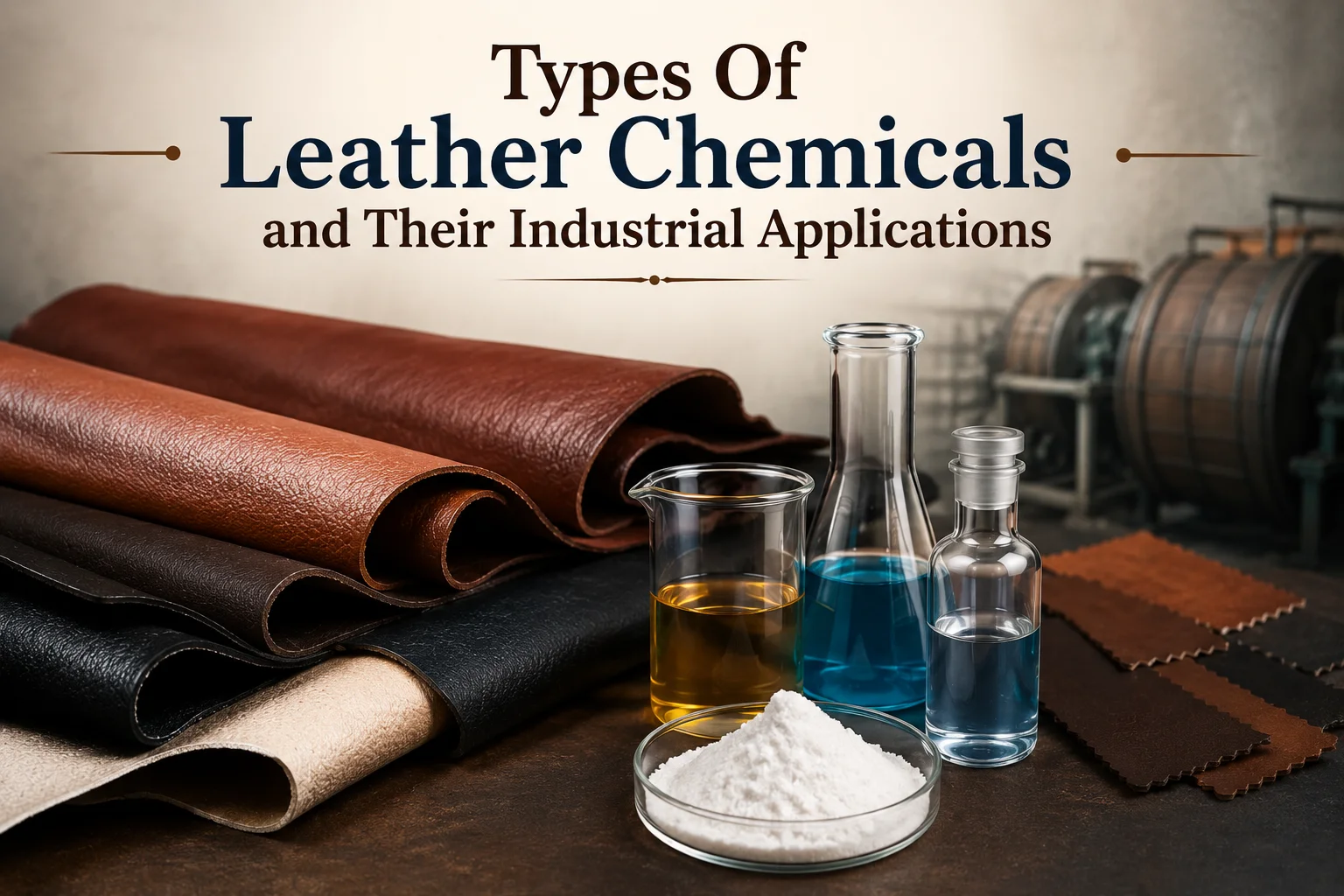
Types Of Leather Chemicals and Their Industrial Applications
Leather manufacturing involves much more than turning raw hides into finished products. Every stage requires specific chemicals that help improve quality, durability, appearance, and performance. From preparing the hide to giving the final shine, different chemicals play an important role throughout the process.
Knowing the different types of leather chemicals enables manufacturers to select appropriate products for each stage of production. It also ensures consistent product quality and compliance with industry standards. Currently, sectors like footwear, automotive, furniture, fashion, and accessories rely on specialized leather chemicals to create high-quality leather.
Why Are Leather Chemicals Important?
Leather production is a multi-step process. Each stage has its own requirements, and no single chemical can perform every function.
The right leather processing chemicals help manufacturers:
- Improve leather strength and flexibility
- Prevent bacterial and fungal growth
- Enhance colour absorption
- Increase resistance to moisture and heat
- Provide a smooth and uniform finish
- Improve production efficiency
- Extend the life of leather products
Without suitable chemicals, leather may become stiff, uneven, weak, or lose its appearance over time.
What Are the Main Types of Leather Chemicals?
The leather industry uses different chemical groups depending on the manufacturing stage.
| Chemical Type | Primary Purpose | Common Application |
| Soaking chemicals | Clean and rehydrate hides | Initial processing |
| Liming chemicals | Remove hair and unwanted proteins | Beamhouse operations |
| Deliming and bating chemicals | Prepare hides for tanning | Pre-tanning stage |
| Leather chemicals for tanning | Stabilise collagen fibres | Tanning process |
| Fat liquors | Improve softness and flexibility | Post-tanning |
| Dyes and pigments | Add colour | Dyeing process |
| Leather finishing chemicals | Improve appearance and protection | Final finishing |
Each category contributes to producing leather with specific properties required by different industries.
What Are Leather Processing Chemicals?
The term leather processing chemicals refer to all chemicals used from the beginning of leather manufacturing until the finished product is ready.
These include chemicals used for:
- Cleaning raw hides
- Hair removal
- Fibre opening
- Tanning
- Neutralisation
- Dyeing
- Fat liquoring
- Finishing
Every stage depends on carefully selected chemicals to achieve consistent quality. The combination of different leather processing chemicals determines the final look, feel, and durability of leather.
Understanding Leather Chemicals for Tanning
Among all stages, tanning is one of the most important. During this step, raw animal hides are converted into stable leather that resists decomposition.
Different leather chemicals for tanning are selected depending on the required leather properties.
Some commonly used tanning systems include:
Chrome Tanning
Chrome tanning is widely used because it offers:
- High durability
- Better heat resistance
- Faster processing
- Soft leather
It is commonly used for footwear, bags, and upholstery.
Vegetable Tanning
Vegetable tanning uses natural tannins extracted from plants.
It is suitable for:
- Belts
- Wallets
- Saddlery
- Premium leather goods
This method produces firm leather with a natural appearance.
Synthetic Tanning Agents
Synthetic tanning chemicals help improve:
- Colour consistency
- Softness
- Light fastness
- Process control
Many manufacturers combine synthetic agents with other leather chemicals for tanning to achieve customised leather properties.
How Do Leather Finishing Chemicals Improve Leather?
Once leather has been dyed and softened, it moves to the finishing stage. This is where leather finishing chemicals create the final appearance and protective surface.
These chemicals help improve:
- Surface smoothness
- Scratch resistance
- Water resistance
- Gloss level
- Colour consistency
- Touch and feel
Different products require different finishes.
For example:
- Matte finish for premium footwear
- High gloss for fashion accessories
- Protective coating for automotive interiors
- Flexible coating for leather garments
Modern leather finishing chemicals also improve durability while maintaining leather’s natural texture.
Leather Chemicals and Their Uses Across Industries
Different industries require leather with different performance characteristics. This makes selecting the right leather chemicals and their uses extremely important.
Footwear Industry
Footwear manufacturers require leather that offers:
- Flexibility
- Abrasion resistance
- Water resistance
- Colour stability
Both leather processing and finishing chemicals play an important role in producing durable shoes.
Automotive Industry
Automotive leather must withstand:
- High temperatures
- UV exposure
- Daily wear
- Frequent cleaning
Special finishing systems improve durability without affecting comfort.
Furniture Industry
Furniture leather requires:
- Soft texture
- Long-lasting colour
- Resistance to stains
- Easy maintenance
Appropriate leather chemicals and their uses help achieve these performance requirements.
Fashion Accessories
Luxury handbags, wallets, belts, and jackets depend on:
- Rich colours
- Smooth finish
- Premium appearance
- Long-lasting quality
Manufacturers carefully select finishing chemicals to create attractive leather products.
How Is the Right Chemical Selected?
Selecting leather chemicals depends on several factors.
Manufacturers usually consider:
- Type of leather
- End application
- Production process
- Required finish
- Environmental regulations
- Customer specifications
Choosing suitable types of leather chemicals helps improve productivity while reducing defects during manufacturing.
Key Factors to Consider Before Choosing Leather Chemicals
Before purchasing chemicals, manufacturers should evaluate product quality as well as supplier reliability.
Important factors include:
- Consistent chemical performance
- Compatibility with existing production processes
- Technical support
- Product quality standards
- Environmental compliance
- Cost-effectiveness
- Supply consistency
Reliable suppliers help manufacturers maintain stable production with fewer processing issues.
Emerging Trends in Leather Chemical Technology
The leather industry continues to improve its manufacturing processes. Chemical manufacturers are developing products that support both performance and sustainability.
Some major trends include:
- Low-VOC finishing systems
- Improved water-based coatings
- Better process efficiency
- Reduced chemical consumption
- Enhanced colour performance
- Eco-friendly production technologies
These developments allow manufacturers to improve product quality while meeting changing industry expectations.
Why Understanding Leather Chemicals Matters
Every leather product goes through multiple processing stages before reaching the customer. Each stage depends on carefully selected chemicals.
Understanding leather chemicals helps manufacturers improve quality, reduce challenges, and meet specific needs. Whether making footwear, automotive upholstery, furniture, or fashion accessories, choosing the right tanning, processing, and finishing chemicals is essential for consistent production.
Supporting Better Leather Manufacturing
Selecting the right chemicals is essential for producing leather that meets industry expectations for quality, durability, and performance. From preparing raw hides to achieving the desired finish, every stage of the manufacturing process depends on carefully chosen chemical solutions. Understanding the different types of leather chemicals and their applications enables manufacturers to improve production efficiency, maintain consistent quality, and create leather products that meet the specific requirements of industries such as footwear, automotive, furniture, and fashion.
For manufacturers looking for reliable specialty chemical solutions, Vinati Organics offers products designed to support various leather processing applications. With a focus on quality, consistency, and innovation, the company helps businesses meet evolving manufacturing needs while delivering dependable solutions for modern leather production.




 K&A
K&A