





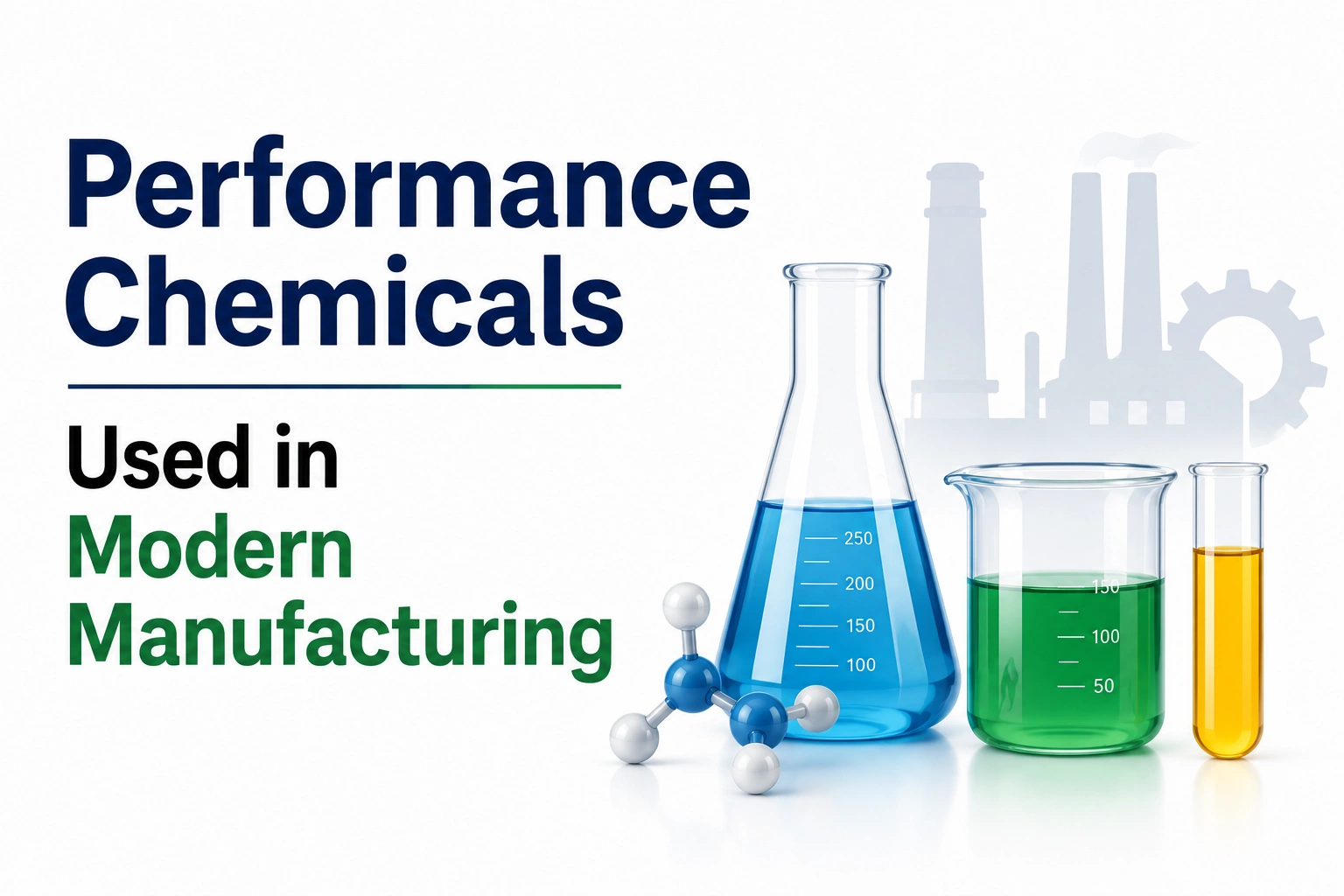
Performance Chemicals Used in Modern Manufacturing
Posted on: August 25, 2026
Modern manufacturing depends on chemicals that do more than serve as basic raw materials. Many products need specific properties such as heat stability, oxidation resistance, water reduction, fire suppression, or improved processing. This is where performance chemicals become important.
Unlike basic chemicals that mainly act as inputs for further production, performance chemicals are selected for the function they provide in a finished formulation or process. Their use can improve product quality, consistency, durability, and process control.
The range is broad. It includes materials used in plastics, construction, fire safety, coatings, polymers, and other industrial applications. Some are supplied as intermediates, while others are used directly in formulated products.
This article looks at the role of performance chemicals in modern manufacturing, the main application areas, and why choosing the right material matters.
What Are Performance Chemicals?
Performance chemicals are materials used because of a specific function they provide. The required property can vary based on the industry and end of use.
For example, a manufacturer may need a chemical that can:
- Improve resistance to heat and oxidation
- Increase the workability of concrete
- Support polymer stability
- Control a chemical reaction
- Improve fire suppression
- Provide a required physical or chemical property
- Support the production of downstream specialty products
Many industrial chemicals fall into this broad category. However, not every industrial chemical is a performance chemical. The difference often comes down to how the material contributes to a specific process or product.
In B2B manufacturing, factors such as purity, consistency, supply reliability, technical specifications, and compatibility are also important.
Key Performance Chemicals Used in Manufacturing
Different industries use different chemical materials to achieve specific results. Some of the common groups include:
| Chemical Group | Main Manufacturing Role | Common Application |
| Antioxidants | Protect materials from oxidation | Plastics and polymers |
| Phenolic intermediates | Support downstream synthesis | Chemical manufacturing |
| Acrylic polymers | Improve formulation performance | Construction and coatings |
| Potassium bicarbonate | Fire suppression and pH control | Safety and industrial processes |
| Superplasticiser additives | Improve concrete workability | Construction |
The choice depends on the formulation and requires performance. A chemical that works well in one process may not be suitable for another.
This is why manufacturers usually assess specifications, dosage, compatibility, storage conditions, and end-use requirements before selecting a material.
How Industrial Chemicals Improve Manufacturing Performance
The value of industrial chemicals comes from their ability to influence how materials behave during production or use.
In polymer manufacturing, additives can help reduce degradation caused by heat and oxygen. This can support the stability and service life of plastic products.
In construction, chemical additives can help concrete achieve better workability while using less water. Vinati Organics’ VINPLAST-245, for example, is an acrylic superplasticiser used in concrete formulations to improve workability and water reduction.
Performance materials can also help manufacturers maintain consistent production. When a chemical has controlled specifications and predictable behaviour, it becomes easier to manage formulation and quality requirements.
For this reason, industrial chemicals are often assessed not only by price but also by purity, performance, consistency, and supply support.
The Role Of 2,4-Di-Tert-Butylphenol in Industry
2,4-Di-Tert-Butylphenol is an important chemical intermediate used in the production of antioxidants and UV stabilisers.
The compound is also known as 2,4-DTBP. Its CAS number is 96-76-4. Vinati Organics lists applications for this material in antioxidant production, including Antioxidant 168, as well as in the manufacture of light-protection agents for polymer stabilisation.
The importance of 2,4-Di-Tert-Butylphenol comes from its role further down the manufacturing chain. It is not simply selected for direct use. It can serve as a building block for products that help protect polymers from degradation.
The compound listed as 96-76-4 has a molecular formula of C14H22O. Its handling, packaging, and specification requirements should be assessed according to the intended industrial application.
For manufacturers working with plastics and related materials, the consistent supply of 2,4-Di-Tert-Butylphenol can therefore be important for downstream antioxidant production.
How Concrete Chemicals Support Modern Construction
Construction is another major area where performance chemicals have a clear role.
Concrete formulations often require additives that improve workability, water reduction, setting behaviour, or durability. A concrete admixture manufacturer may use specialised chemical materials to develop formulations for different project requirements.
VINPLAST-245 is described by Vinati Organics as an acrylic superplasticiser used in concrete additives. The company states that it can help provide high workability without adding extra water.
A concrete admixture manufacturer must consider several factors when developing such products. These include cement type, mix design, dosage, temperature, mixing conditions, and compatibility with other materials.
This makes chemical selection an important part of concrete formulation. The right material can help manufacturers achieve the required balance between workability, strength, and durability.
Where Diversey Chemicals Fit into Manufacturing
The term diversey chemicals is often used in searches related to cleaning and hygiene chemical applications. In industrial environments, cleaning chemicals can play an important role in maintaining equipment, production areas, and processing systems.
Their requirements differ from those of polymer additives or construction chemicals. Cleaning formulations may need properties such as controlled cleaning action, compatibility with surfaces, stability, and safe handling.
For buyers researching diversey chemicals, it is important to identify the exact product, formulation, application, and required specifications rather than selecting a chemical based only on its general category.
This approach helps manufacturers choose materials that match their actual process requirements.
Purple K Powder and Industrial Fire Safety
Fire safety is another area where a specialised chemical can provide a clear performance benefit.
Purple K powder is a potassium bicarbonate-based dry chemical used in fire suppression. Vinati Organics describes potassium bicarbonate as a material used for Class B and Class C fire applications, where it is known as Purple K powder.
The material works by interfering with chemical reactions in the combustion zone. This makes purple K powder useful in environments where flammable liquid or gas fires can present a serious risk.
For industrial users, the choice of fire suppression material should depend on the fire class, equipment, site conditions, and applicable safety requirements. As with other industrial chemicals, proper storage and handling are important.
What Manufacturers Should Check Before Buying
Choosing a performance chemical requires more than checking the product name. Buyers should review:
- Purity and technical specifications
- Application suitability
- Batch-to-batch consistency
- Packaging options
- Storage requirements
- Regulatory documentation
- Supply capacity
- Technical support
- Compatibility with the existing formulation
- Quality control practices
A concrete admixture manufacturer, for example, may require different information from a polymer producer buying an antioxidant intermediate.
Similarly, a buyer sourcing 96-76-4 should confirm the required grade and specifications before placing an order. These checks can reduce formulation problems and help maintain consistent production.
Why Supplier Selection Matters
A reliable supplier can have a direct effect on manufacturing continuity. Chemical buyers often need consistent quality over repeated orders rather than a single successful batch.
Vinati Organics states that it supplies speciality chemicals and organic intermediates to industrial and chemical companies across more than 35 countries. Its product portfolio includes speciality aromatics, speciality monomers, butyl phenols, antioxidants, miscellaneous polymers, and inorganic chemicals.
Its butyl phenol range includes 2,4-DTBP, PTBP, OTBP, and other related products. The company also highlights its integration with isobutylene production, which is an important raw material for selected butyl phenols.
For B2B buyers, such manufacturing depth can matter when sourcing materials for long-term production.
Choosing Performance Chemicals for Better Results
Performance chemicals are now an important part of modern manufacturing because they help control specific properties and improve the function of finished products. Their value depends on the right match between chemical, process, and application.
From polymer antioxidants and 2,4-Di-Tert-Butylphenol to construction additives and purple K powder, each material serves a different purpose. Buyers should therefore assess technical specifications, quality, compatibility, and supply reliability before deciding.
Vinati Organics supports industrial buyers with a portfolio of speciality chemicals and organic intermediates. Their product range includes materials for polymers, construction applications, antioxidants, and other industrial uses. Buyers looking for suitable industrial chemicals or a reliable concrete admixture manufacturer can explore their product portfolio and contact their team for application-specific requirements.
Related Posts





 K&A
K&A